
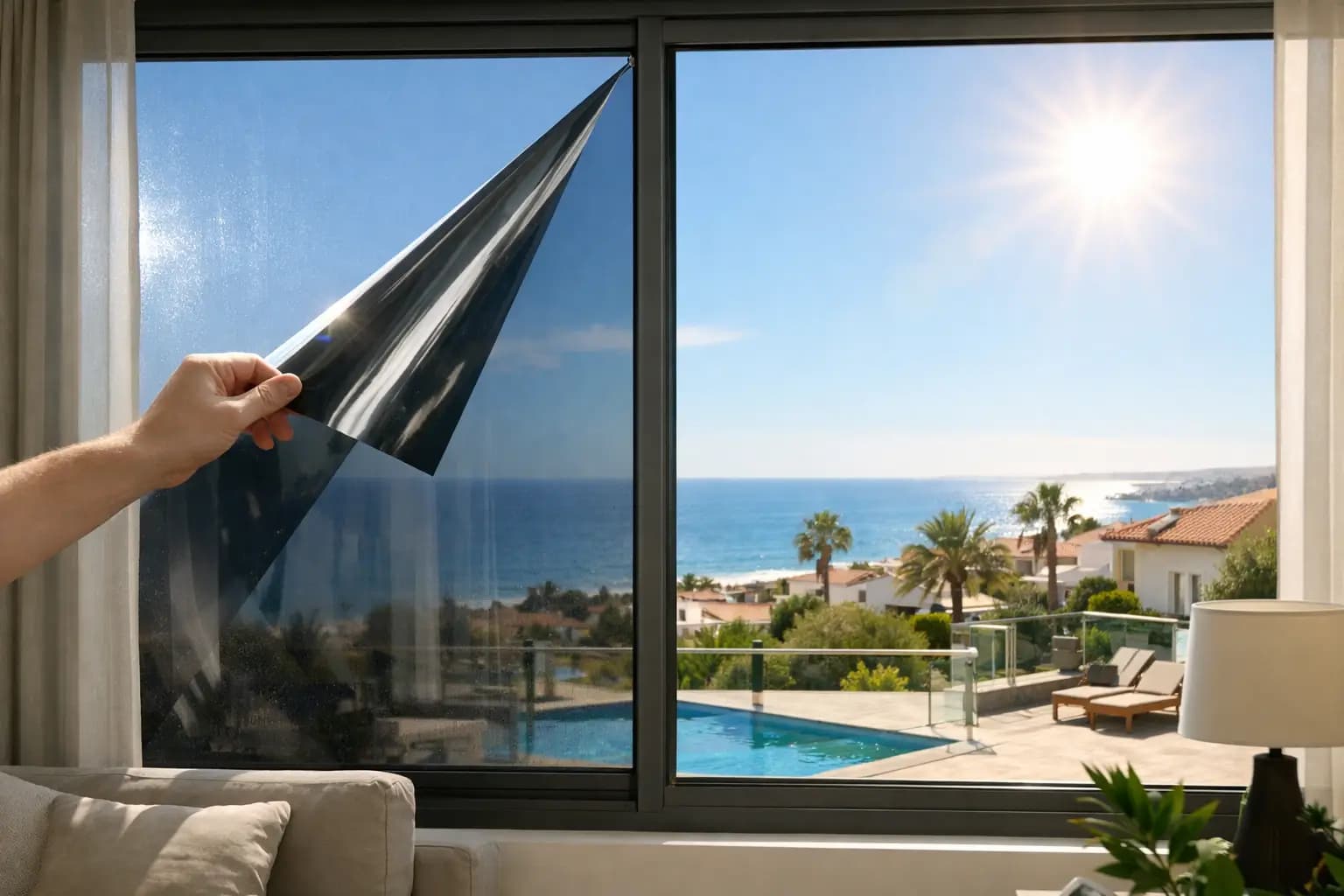
By late morning in Cyprus, a sunny room can already feel like a greenhouse. If you are dealing with hot glass, fading furniture, and an AC unit that never seems to catch up, finding the best heat protection for windows Cyprus homes need is less about style and more about comfort, energy use, and making everyday life easier.
The good news is that there is no single "correct" fix. The right choice depends on whether you rent or own, how much direct sun your windows get, and whether you want a fast, low-disruption upgrade or a long-term solution. In Cyprus, especially in apartments and homes across Larnaca, Limassol, and other coastal cities, west-facing and south-facing windows usually cause the biggest problems.
What works best in Cyprus heat
Cyprus sun is intense, and the heat load through glass is real. Standard windows let in daylight, but they also let in solar heat that raises indoor temperatures fast. That means more strain on cooling systems and less comfort in rooms that should be usable all day.
For most homes, the best results come from blocking heat before it fully enters the room. That is why exterior shading, solar control window film, and well-fitted shutters often outperform purely decorative indoor options. Interior blinds and curtains still help, but they usually work better as part of a layered setup rather than as the only defense.
If you want the short answer, the best heat protection for windows Cyprus residents usually choose falls into three practical tiers. Window film is often the easiest upgrade with strong performance for the cost. Exterior shutters and external screens offer excellent heat reduction, especially on the hottest exposures. Full glass replacement with low-E or solar control glazing is the premium option when you are renovating or building.
Window film: the fastest high-impact fix
Solar control window film is one of the most common answers for overheated rooms, and for good reason. It can reduce solar heat gain, cut glare, and help protect floors, sofas, and curtains from fading. In a bright Cyprus apartment where changing the actual windows is not realistic, film is often the most efficient place to start.
Not all films perform the same. Some are darker and more reflective, which usually improves heat rejection but changes the look of the glass. Others are more neutral in appearance and preserve clearer views, but may offer less dramatic cooling. If your building has appearance rules, or you simply do not want mirrored windows, this trade-off matters.
There is also a practical difference between DIY film and professionally installed film. DIY products can work for small windows, but bubbles, peeling corners, and uneven edges are common in high-heat conditions. Professional installation costs more upfront, yet the finish tends to last longer and perform better, especially on large sliding doors or sun-exposed panes.
When film makes the most sense
Film is especially useful if you rent, if you want to keep your existing frames, or if one or two rooms are much hotter than the rest of the home. It is also a smart fit for offices, storefronts, and modern apartments with large areas of glass.
The limitation is simple: film helps a lot, but it does not insulate like a full high-performance window system. If your frames leak air or the glass itself is outdated, film improves the situation without completely solving it.
Exterior shading often beats interior shading
If the sun is hitting your glass directly for hours, exterior protection usually gives the strongest results. This includes roller shutters, exterior blinds, awnings, and external shade screens. The reason is straightforward - once the heat has already passed through the glass, it is harder to manage.
Roller shutters are a familiar choice in Cyprus because they are practical, durable, and effective. They can significantly reduce heat gain, improve privacy, and add a layer of security. For bedrooms, they also help with sleep by blocking early light. The trade-off is that they change the exterior look of the property and can make a room feel closed off when fully down.
Awnings and external screens are another good option when you want shade without fully darkening the room. They work particularly well on balconies, patio doors, and windows that get strong afternoon sun. In many homes, they create a better balance between heat control and natural light.
Best heat protection for windows Cyprus apartments can actually use
Apartment living adds a few complications. You may need landlord approval, building committee approval, or a solution that does not alter the facade too much. In those cases, solar film or discreet interior cellular shades are often easier to approve than new shutters or large awnings.
For top-floor apartments or units with broad glass doors facing west, external shading can still be worth pursuing. The afternoon heat in those spaces can be intense enough that a more visible solution pays off quickly in comfort.
Blinds and curtains: helpful, but choose the right type
Standard sheer curtains look good, but they do very little against serious heat. If your goal is cooling rather than decoration, look for thermal curtains, blackout curtains with reflective backing, or tightly fitted cellular shades. These options can reduce heat gain better than lightweight fabrics and also improve privacy.
Cellular shades are especially useful because their honeycomb structure traps air. They do not stop solar heat as effectively as outside shading, but they can noticeably improve comfort in bedrooms and living spaces. Blackout curtains help most when they are wide enough and close to the wall, leaving fewer gaps for sunlight to spill through.
The downside is that interior coverings often reduce daylight just when you want to keep a room bright and usable. That is why many people in Cyprus combine film for daytime heat control with curtains or blinds for added insulation and privacy later in the day.
Upgrading the glass: best for owners planning long term
If you own your home and are already replacing windows, upgrading the glass can be the most complete solution. Double glazing with solar control coatings, low-E glass, and better-sealed frames can reduce heat transfer and improve overall energy performance. This is particularly valuable in detached homes or renovated properties where older aluminum frames and basic glass are still in place.
That said, this is the most expensive route, and it is not always the first upgrade that gives the best return. If your main problem is direct solar gain on a few large windows, film or shading may solve most of the discomfort at a fraction of the cost. Full replacement makes more sense when the windows are already due for an upgrade because of age, drafts, condensation issues, or noise.
How to choose the best option for your home
Start with exposure. East-facing windows get morning sun, which can be manageable. West-facing windows are usually the hardest to live with because they heat up the home when outdoor temperatures are already high. South-facing windows can also be a major source of heat, depending on shade and season.
Then look at your living situation. Renters usually benefit most from removable or low-disruption options like curtains, shades, or approved window film. Owners have more flexibility and can think in layers: film plus shutters, or upgraded glazing plus external screens.
Your tolerance for darkened rooms matters too. Some heat-control products work very well because they block a lot of light. That may be perfect in a bedroom, but frustrating in a kitchen or home office. A room-by-room approach is often smarter than trying to use the same solution everywhere.
Budget matters, but so does timing. If summer is already here and one room is becoming unusable every afternoon, a quick upgrade now can make more sense than waiting for a bigger renovation later.
Common mistakes people make
A lot of people start by buying whatever blinds look best online, then wonder why the room still feels hot. Style and heat control are not the same thing. Another common mistake is treating all window film as identical, when actual solar rejection and visible light transmission vary a lot.
Poor installation is another issue. Gaps around curtains, badly fitted shades, or low-quality film can reduce performance enough that the upgrade feels disappointing. In Cyprus heat, details matter more than people expect.
It is also easy to focus only on the glass and forget the surrounding frame, wall exposure, and room use. If a room has weak insulation and gets hit by direct afternoon sun, windows are part of the problem, not always the whole problem.
What we would choose first
For most people looking for the best heat protection for windows Cyprus homes need right now, we would start with solar control film on the hottest windows or doors. It is practical, relatively fast to install, and usually delivers noticeable results without changing the whole property.
If the heat is severe and you own the place, exterior shading is often the next strongest step. And if you are renovating anyway, upgrading the glazing can make sense as part of a bigger plan rather than as a standalone fix.
A cooler home in Cyprus usually comes from choosing the right layer in the right place, not from chasing the most expensive option. The smart move is the one that fits your window, your building, and the way you actually live in the space.