
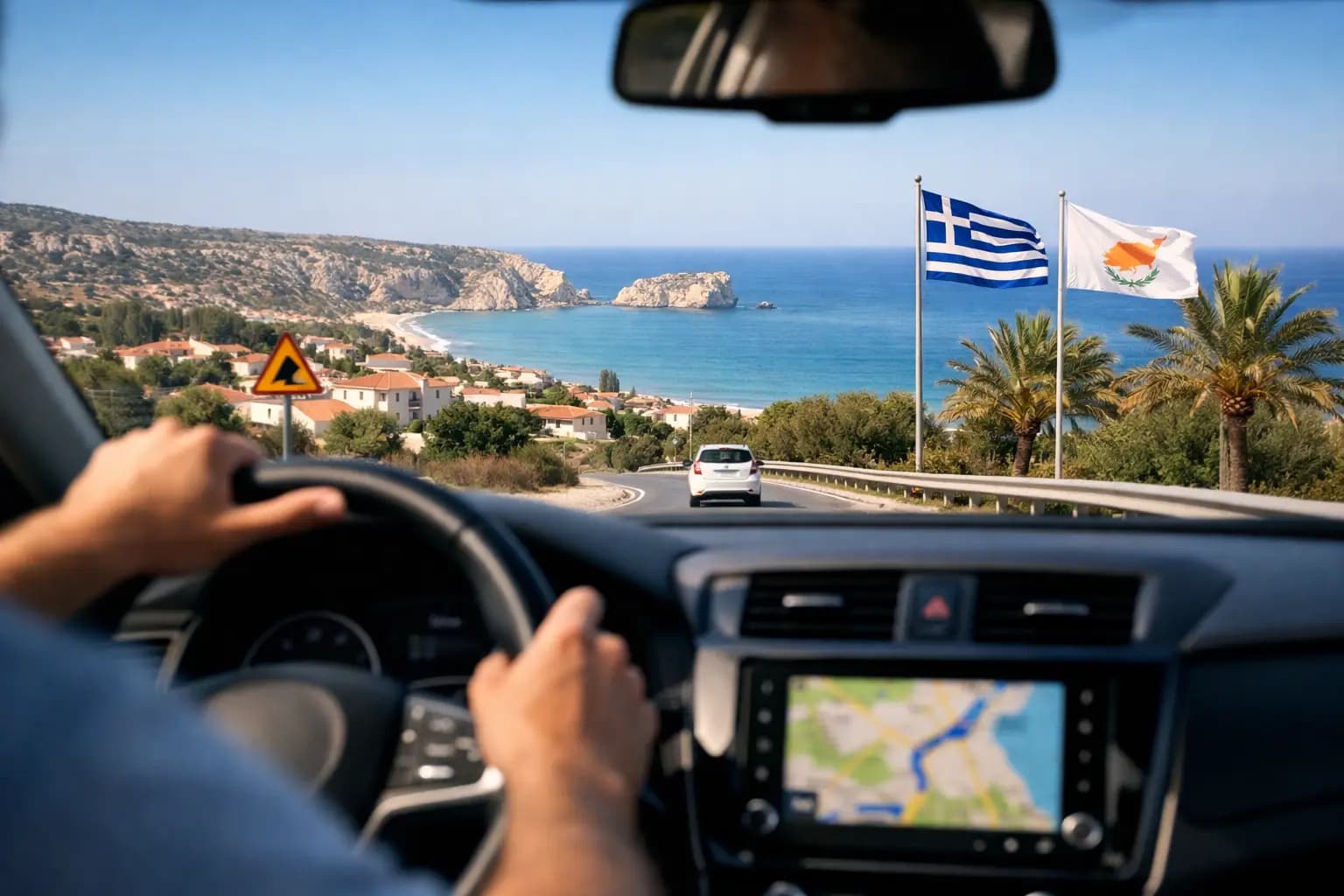
The first time you pull out of a parking spot in Cyprus, your brain will probably argue with your hands. The road feels backward, the roundabout comes faster than expected, and the driver behind you somehow seems both patient and impatient at the same time. That is usually how driving in Cyprus for expats begins - a mix of quick adjustment, small surprises, and a lot of learning by doing.
The good news is that Cyprus is very manageable once the first few drives are behind you. Roads in cities like Larnaca are generally straightforward, distances are short, and you can get from neighborhood errands to beach roads to mountain routes without spending half your day in traffic. Still, there are a few local habits and legal details that are worth understanding early, especially if you are planning to rent, buy, or register a car.
Driving in Cyprus for expats starts with one big shift
Cyprus drives on the left. If you are arriving from the US or most of mainland Europe, that single change affects almost everything - lane position, turns, roundabouts, parking exits, and even where your eyes go first at intersections.
The adjustment period is different for everyone. Some expats feel comfortable after one afternoon. Others need a week or two before driving feels natural. The trick is not confidence. It is repetition. Start with familiar routes during daylight, avoid dense city center driving on day one, and give yourself time to get used to local lane flow before attempting busy roundabouts or narrow residential streets.
Roundabouts deserve extra attention because they are everywhere, and they are one of the first places where new arrivals get flustered. In Cyprus, traffic already in the roundabout generally has priority, and because you are driving on the left, your entry angle and visual checks may feel reversed at first. If you hesitate too long, local drivers may edge forward. If you rush, you may cut someone off. A calm, deliberate approach works best.
License rules depend on where you are from
This is the part where "it depends" really matters. Whether you can legally drive in Cyprus on your existing license depends on your nationality, residency status, and how long you have been living on the island.
For many new arrivals, a foreign license is fine for an initial period. EU and EEA license holders usually have a more straightforward path. Non-EU expats may be allowed to use their home country license for a limited time, sometimes with an international driving permit as a practical backup, especially when renting a car or dealing with language gaps.
If you are staying longer term, do not assume your setup remains valid indefinitely. Once you become a resident, rules around exchange, recognition, or retesting can apply. These details can shift, and they are exactly the kind of thing people discover too late - often when trying to update insurance or complete registration paperwork.
If you are unsure, check your status early rather than after buying a car. It saves money and avoids the annoying scenario where your car is ready but your paperwork is not.
Renting is easy, owning is more practical
Most expats start with a rental, and that makes sense. It gives you time to learn local roads, test whether you really need a car every day, and avoid rushing into a purchase before you understand prices, parking, and maintenance.
Short-term rentals are common in Cyprus, and many agencies are used to serving international residents. That said, not all rental experiences are equal. Some companies are flexible and transparent. Others advertise a low daily rate, then add extra conditions for insurance, mileage, or damage deposits. Before signing anything, check what is actually included.
If you plan to stay for several months or more, buying may be the smarter move. Outside very central urban areas, a car makes daily life much easier. It is not only about commuting. It is about grocery runs, government offices, school pickups, beach access, and reaching services that may not be within walking distance.
Used cars are common, but condition varies. A lower price can be appealing until you discover overdue maintenance, weak air conditioning, or paperwork that is not as tidy as it should be. In Cyprus, practical matters like registration transfer, road tax, insurance, and mechanical checks matter more than cosmetic polish.
The local driving style is not aggressive, but it is assertive
This catches many newcomers off guard. Drivers in Cyprus are not necessarily reckless in the dramatic sense, but they can be fast to move, quick to park creatively, and confident in situations where an expat may still be hesitating.
That shows up in a few ways. Some drivers follow a bit closer than you may like. Signals are not always used consistently. Cars may stop briefly where they technically should not. On narrow streets, people often rely on eye contact and informal negotiation more than strict choreography.
This does not mean the roads are chaotic. It means you need to stay alert and avoid assuming everyone will drive exactly as the rulebook suggests. Defensive driving helps. So does accepting that local rhythm matters. If you drive too timidly in every situation, you may create confusion rather than safety.
The goal is to be predictable. Signal clearly, commit to your lane, slow down when streets tighten, and do not let pressure from the car behind force a decision you are not ready to make.
Parking can be simple or surprisingly annoying
In many parts of Cyprus, parking is easier than in larger European capitals. In residential areas or around neighborhood shops, you can often find a space without too much trouble. But "easy" depends heavily on location and time of day.
Near busy commercial streets, older town areas, schools, and seafront zones, parking can become a daily irritation. Some spaces are metered, some are informal, and some look acceptable until you notice a curb marking or sign you missed on the way in.
For expats, the bigger issue is not usually finding a space. It is learning which spaces are actually safe to use. Local drivers may park in ways that look unofficial but somehow work. That does not always mean you should copy them. If you are new, err on the cautious side until you understand the local pattern.
If you live in a central apartment, parking should be part of your housing decision, not an afterthought. A place with private parking can save a lot of low-level stress.
Insurance, road tax, and inspections are not optional details
Once you move from renting to owning, admin becomes part of the driving experience. You will need valid insurance, and the exact cost depends on your age, driving history, car type, and insurer. New arrivals sometimes pay more at first, especially if their no-claims history from another country is hard to verify or not fully recognized.
Road tax is another recurring cost, and if you own an older vehicle, inspections matter too. The island's climate is kind to many things, but heat, coastal air, and stop-start urban driving still wear cars down. A cheap vehicle can become expensive fast if it has been poorly maintained.
This is one of those areas where local guidance helps. Practical advice from people who have already handled registration offices, mechanics, and insurance providers in your city is often worth more than generic online information.
City driving versus island driving
Driving in Larnaca is different from driving across Cyprus on a weekend. In the city, the challenge is usually parking, short-distance congestion, and narrow side streets. On longer drives, the issue is speed, fatigue, and changing road conditions.
Highways are generally good and make intercity travel easy. That is one of the nicest parts of living here. You can leave an urban neighborhood and be somewhere completely different within a relatively short time. But once you get into mountain villages or rural roads, conditions change. Roads can narrow quickly, bends can be tighter than expected, and nighttime visibility may drop fast.
Summer also changes the experience. Roads near beaches, resorts, and tourist areas can become much busier, especially on weekends. If your daily routine depends on driving through one of these zones, seasonality matters more than you might expect.
Small habits that make a big difference
The easiest way to settle into driving in Cyprus for expats is to reduce friction before it happens. Use navigation even for familiar routes if you are still adapting to left-side driving. Keep cash or a payment method ready for parking where needed. Do not wait until your fuel is low in an unfamiliar area. And if you are buying a car, sort insurance and registration details before pickup day, not after.
It also helps to build a shortlist of practical local support - a reliable mechanic, a tire shop, a car wash, and someone who can help explain paperwork if needed. This is where a local discovery platform like Pundo can be genuinely useful, especially when you are trying to find services nearby instead of guessing which business to trust.
You do not need to become a confident Cyprus driver overnight. You just need a few ordinary drives, a bit of patience at roundabouts, and enough local context to avoid the expensive mistakes. After that, the car stops feeling like a relocation problem and starts feeling like what it should be - a simple way to enjoy more of the island.