
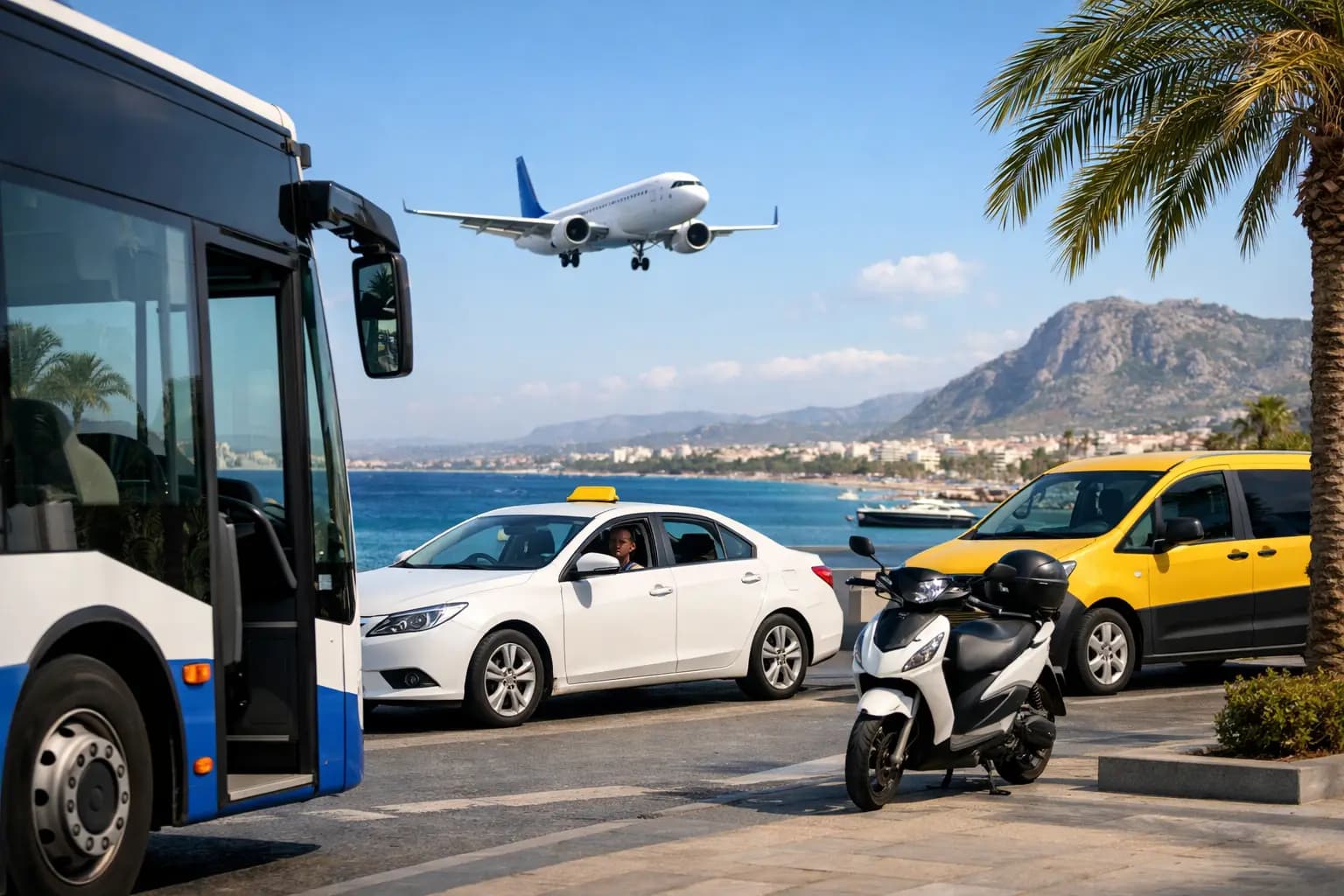
Landing in Cyprus without a car can feel easy at first and oddly complicated by day three. The island is relaxed, the weather is generous, and distances look short on the map - but your real experience depends a lot on where you live, when you travel, and how flexible your schedule is. This guide to local transport Cyprus is built for newcomers, expats, and temporary residents who want the practical version, not the postcard version.
What local transport in Cyprus is really like
Cyprus is not a place where one transport option does everything well. If you are moving around central Larnaca, commuting short distances in Limassol, or handling everyday errands near urban areas, buses and taxis can be enough. If you plan to explore villages, beaches outside town, industrial areas, or multiple cities on your own schedule, you will quickly notice the limits of public transportation.
That does not mean getting around is difficult. It means you need the right mix. Many residents use buses for routine routes, taxis for convenience, and a rental or private car when they need freedom. For short stays, that hybrid approach is often the smartest choice.
A guide to local transport Cyprus by travel type
The best way to understand transport on the island is to think in categories: city travel, intercity travel, airport connections, and flexible travel for errands or weekend trips. Each works differently.
Buses for daily city movement
Buses are the main public transport option in Cyprus. They are usually the most affordable way to get around, and for regular daytime routes in cities they can be perfectly practical. If you live near a well-served road in Larnaca, Nicosia, Limassol, or Paphos, buses may cover a big part of your weekly routine.
The trade-off is frequency and timing. Service is better on major routes than in residential outskirts, and evening or Sunday travel can be more limited than many newcomers expect. If your job starts early, ends late, or requires changing buses, a route that looks simple on paper may become inconvenient fast.
For expats, the key question is not just whether a bus exists. It is whether it fits your actual day. A bus every 20 or 30 minutes can be fine for casual errands. It is less fine when you are trying to make a medical appointment, school pickup, or airport connection.
Intercity buses for moving between major areas
If you need to travel between major cities, intercity buses are often a solid option. They are much more useful than many first-time visitors assume, especially for straightforward trips between urban centers. They can save money, remove parking stress, and work well if you are traveling light.
Still, they are not a full replacement for a car. The moment your destination is not close to a central stop, you may need a taxi for the last stretch. That makes intercity travel affordable overall, but not always as cheap as it first appears.
Taxis for convenience and time-sensitive trips
Taxis are one of the easiest ways to remove friction, especially if you are new to Cyprus and still learning how neighborhoods connect. They are useful for airport runs, appointments, late-night travel, and trips where bus timing does not work.
The downside is cost. For daily commuting, taxis add up quickly. For occasional use, though, they can be worth it - particularly when the alternative is losing an hour to a bus transfer or walking in summer heat with shopping bags.
In busy areas, it is usually easy to find a taxi or book one by phone or app, but availability can vary by time and location. In smaller areas or at off-peak hours, planning ahead is the safer move.
Driving when flexibility matters most
If your life in Cyprus includes school runs, beach trips, home setup errands, business visits, or exploring places outside city cores, driving becomes the most efficient option by far. This is especially true for families, remote workers staying outside downtown areas, and anyone trying to combine multiple stops in one day.
Cyprus is car-friendly in a practical sense. Roads between cities are generally straightforward, and parking is often easier than in larger European capitals. But driving is not automatically stress-free. You need to factor in licensing rules, insurance, fuel costs, and the simple mental load of adjusting to local road habits if you are new.
For some people, renting a car for weekends and using buses during the week is the sweet spot. For others, buying a car makes sense almost immediately. It depends on how fixed your routine is and how often you need to leave the city grid.
What works best in Larnaca and nearby urban areas
Larnaca is one of the easier places in Cyprus to manage without a car, at least compared with more spread-out areas. If you live close to the center, near the seafront, or along common bus corridors, daily basics can be manageable on foot, by bus, and with the occasional taxi.
That said, Larnaca still rewards proximity. Two apartments may look equally convenient online, but the one near regular services, shops, and practical amenities will save you much more time. This is where local discovery matters. Being near the right pharmacy, supermarket, repair shop, clinic, or coworking spot can reduce your transport needs before you even start planning routes.
If you are house-hunting or settling in, think beyond commute time. Ask how you will reach grocery stores, government offices, gyms, schools, and weekend places. On an island where transport options vary by area, your neighborhood choice shapes your daily life more than many newcomers expect.
Airport travel and first-week logistics
One of the first transport decisions most newcomers face is the airport transfer. If you land with luggage, arrive late, or are heading to a residential address rather than a central hotel, a taxi is usually the easiest option. It is not the cheapest, but after a flight and an unfamiliar arrival, ease often matters more.
Once you are settled, bus connections to and from airports can be useful for lighter, planned trips. The main thing is to check schedules carefully and avoid assuming that airport transport runs with the same rhythm you may be used to elsewhere.
Your first week in Cyprus is also when transport gaps become visible. You may need to visit a mobile provider, collect documents, shop for home basics, and locate services in different parts of town. That is why many people feel fine without a car on day one and much less fine by day five. The early setup phase usually involves more movement than regular life later on.
Apps, timing, and local habits
A good guide to local transport Cyprus should include one simple truth: always verify the route and timing close to your trip. Services can change, stop locations may not be obvious to a newcomer, and practical reality sometimes differs from your first search result.
Use maps, local bus information, and taxi booking tools, but also leave margin for delay. In Cyprus, transport often works best when you give yourself a little breathing room instead of planning to the minute. That approach saves frustration.
It also helps to think seasonally. Summer heat changes what feels walkable. Tourist periods can affect traffic and availability. A route that seems easy in mild weather may feel far less convenient in August.
Should you rely on public transport alone?
Sometimes yes. If you live and work in a well-connected urban area, keep a predictable schedule, and do not mind occasional taxi use, public transport can be enough. This is especially true for solo residents who value lower costs over maximum flexibility.
Sometimes no. If you have children, frequent appointments, mobility concerns, or plans that often involve multiple stops, relying on buses alone can become tiring. The issue is usually not whether public transport exists. It is whether it supports the life you are actually living.
That is the real test in Cyprus. Not theory, but fit.
For many newcomers, the smartest approach is to start simple, learn your local area, and adjust after a few weeks. You do not need to solve island-wide mobility on day one. You just need a realistic setup for the places you actually go. If you are building that routine in Larnaca or nearby, tools like Pundo can help you discover the businesses and services worth living near in the first place - which is often the most useful transport strategy of all.
Cyprus gets easier the moment your daily map becomes familiar, and the right transport choice is usually the one that gives you fewer surprises, not more.