
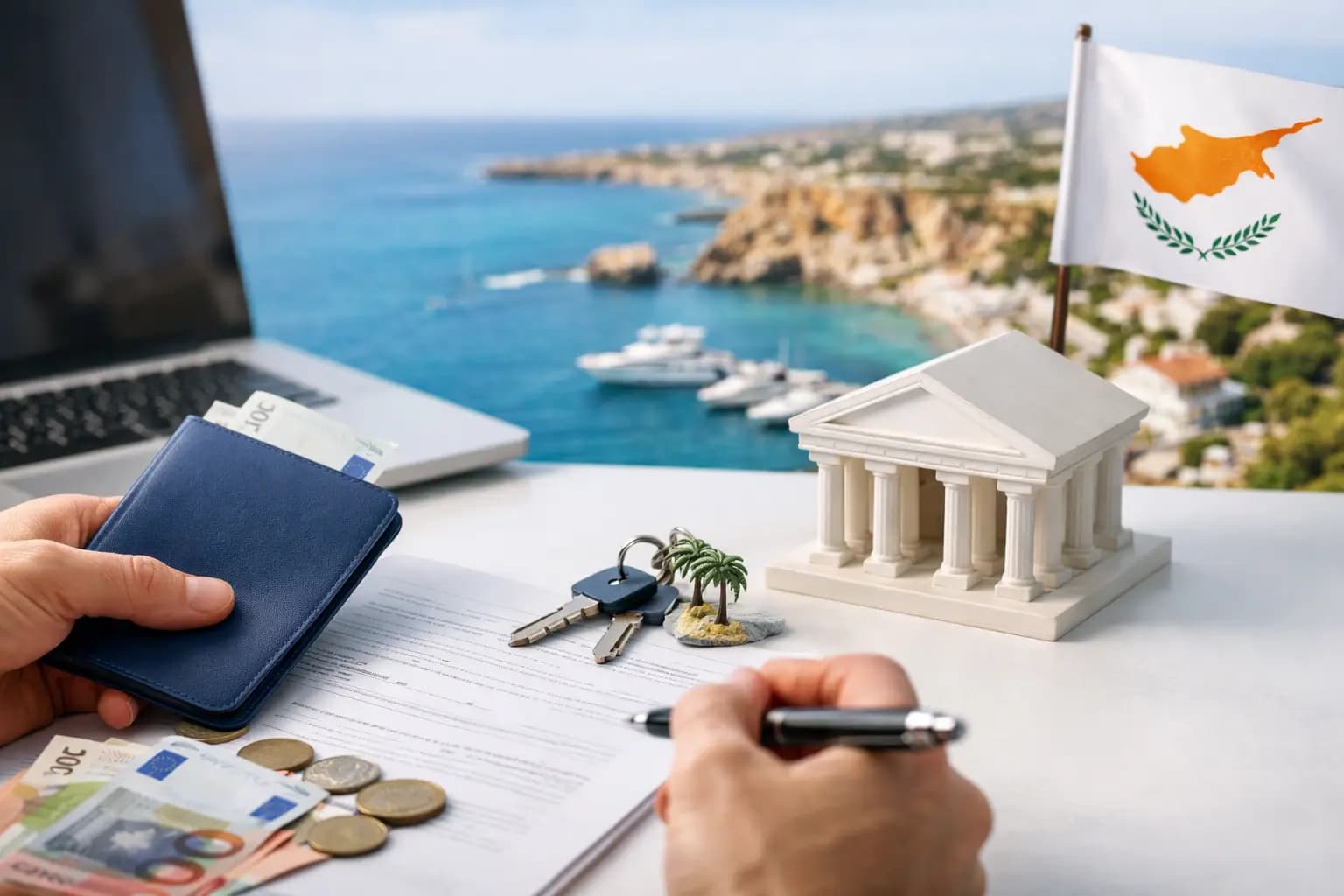
You usually find out how local banking works at the least convenient moment - when your employer asks for an IBAN, your landlord wants a local transfer, or a utility company requests a Cyprus bank account for direct debit. If you are figuring out how to open bank account in Cyprus, the good news is that the process is manageable. The less-good news is that it can feel stricter and slower than many newcomers expect.
For expats, remote workers, and new residents, the biggest mistake is assuming every bank follows exactly the same rules. In Cyprus, the core requirements are similar, but the details can vary by branch, by your residency status, and by the reason you need the account. Going in prepared saves time, repeat visits, and a lot of back-and-forth.
How to open bank account in Cyprus: what banks usually ask for
Most banks in Cyprus will ask for proof of identity, proof of address, and evidence of why you need the account or where your money comes from. That last part matters more than some people expect. Cyprus banks are typically careful with compliance checks, especially for international clients.
In practice, you will usually need a valid passport or national ID, plus a second form of identification in some cases. You may also be asked for proof of your address in Cyprus, such as a rental agreement, utility bill, or official document showing where you live. If you have not yet set up utilities in your own name, some banks may accept a tenancy agreement, while others may want something more formal.
You should also expect requests for employment documents, a work contract, payslips, a tax number, or evidence of self-employment or freelance income. Students may be asked for university documents. Retirees may need pension statements. If you are opening the account before fully settling in, the bank may ask for proof of your overseas address as well.
The basic idea is simple: the bank wants to know who you are, where you live, and how funds will move through the account. If your situation is straightforward, approval is often straightforward too. If your income comes from several countries or irregular freelance work, expect more questions.
Resident or non-resident makes a difference
One of the first things the bank will look at is whether you are considered a resident or non-resident client. This does not always mean permanent residency in the immigration sense. It often means whether you can show an established local connection, such as living in Cyprus, working there, studying there, or running a business there.
Residents usually have an easier path because they can provide a local address, employment documents, and practical reasons for using the account. Non-residents can still open accounts in some cases, but the process is often narrower, more document-heavy, and subject to extra review.
If you have just moved to Larnaca, Limassol, Nicosia, or another city and are in that in-between stage - renting a place, waiting on paperwork, sorting out utilities - it helps to call ahead and explain your status before visiting a branch. A bank may accept temporary evidence in one branch and reject it in another.
Choosing the right bank branch matters more than people think
Many newcomers assume the brand name is the whole story. In Cyprus, the branch experience can matter almost as much as the bank itself. Staff familiarity with international clients, comfort working in English, and willingness to explain document requirements clearly can vary.
That is especially true if your case is not standard. A salaried employee with a long-term rental contract will usually have fewer problems than a digital nomad paid through multiple platforms. If you are self-employed, receive income from abroad, or have recently arrived, it is worth asking upfront whether the branch regularly handles expat applications.
This is where local knowledge helps. A practical platform like Pundo can make everyday setup in Cyprus easier because the challenge is rarely just banking in isolation - it is finding the right branch, the right neighborhood services, and the right local information without wasting a week on trial and error.
What the actual process looks like
In most cases, opening a bank account starts with booking an appointment or visiting a branch to ask what documents they require for your exact status. Some banks allow online interest forms or partial online applications, but full remote onboarding is not always available for everyone.
At the appointment, a bank officer will review your documents, ask about your employment or income source, and confirm the purpose of the account. You may be asked whether you want a current account, savings account, debit card, online banking access, or all of the above.
If your documents are accepted immediately, the application then goes through internal checks. This review can be quick, but it can also take several business days or longer. Delays usually happen because a document is missing, unclear, expired, or not considered sufficient for compliance purposes.
Once approved, you will typically receive your IBAN and account details first, with your debit card and digital banking credentials following after. Some banks issue parts of this process faster than others. If you need the account for salary payments, ask whether the IBAN can be used before the physical card arrives.
Common documents to prepare before you go
Even though requirements differ, it is smart to bring more than the minimum. A strong document file often includes your passport, another ID if available, proof of Cyprus address, proof of previous address, employment contract or company documents, recent bank statements, tax identification number, and proof of income.
Bring originals if possible, plus printed copies. Do not rely on having everything on your phone. Some branches are flexible, but others prefer paper documents they can scan or keep on file. If a document is not in English or Greek, ask in advance whether a translation is required.
This extra preparation may feel excessive, but it is usually faster than making a second or third trip. Cyprus banking can be very efficient when your paperwork matches what the branch expects.
The issues that slow people down
The most common problem is weak proof of address. Many newcomers do not yet have a utility bill in their name, and some banks do not treat short-term booking confirmations as enough. If you are staying in temporary accommodation, ask what alternatives are acceptable before your appointment.
Another sticking point is source of funds. If your money comes from freelance clients, online platforms, overseas companies, or family support, be ready to explain it clearly and document it. Vague answers tend to trigger more questions, not fewer.
Names and addresses also need to match across documents. Small differences can cause surprisingly big delays. If your passport shows one version of your name and your lease shows another, or if your address formatting differs across papers, it is better to clarify that early.
Can you open an account online?
Sometimes, but not always. Digital options are improving, yet Cyprus still leans more branch-based than many people expect, especially for new customers with international backgrounds. Some banks let you start online and finish in person. Others require face-to-face verification from the beginning.
If speed matters, do not assume online means faster. A well-prepared branch appointment can move more quickly than an incomplete digital application that gets pushed into manual review.
What to ask before booking an appointment
A short phone call can save a lot of frustration. Ask whether they open accounts for your residency status, which exact documents they require, whether proof of temporary address is accepted, and how long approval usually takes.
Also ask whether there is a minimum deposit, monthly fee, or card fee. Some people focus only on getting approved and only later realize the account type is not a great fit for everyday use. If you need local transfers, online banking in English, and easy salary payments, say that clearly from the start.
A realistic timeline for expats
If your paperwork is complete and your financial profile is simple, you may get through the process within a few business days. If documents need review or clarification, it can take longer. That is why it is best to start before the account becomes urgent.
For example, if you have just signed a lease or accepted a job offer, begin the account-opening process right away. Waiting until payroll day or utility setup day adds pressure you do not need.
Final thought
Opening a bank account in Cyprus is less about finding a magic shortcut and more about matching your documents to your situation. If you approach it like a local admin task rather than a quick errand, the process usually goes much more smoothly - and once it is done, everyday life on the island gets a lot easier.